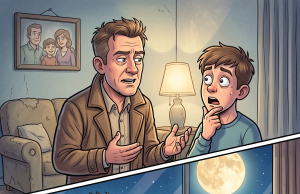
I’m 39 now, and if you’d asked me a month ago whether the past could still reach out and shake your life, I would have laughed. I thought those chapters were closed—packed away where they could no longer hurt me.
I was wrong.
Fifteen years ago, I divorced my husband, Caleb. We were young in that reckless way that feels confident at the time. We shared a bank account with barely twenty dollars in it and argued over groceries like they mattered more than they did.
Then I discovered he was unfaithful.
Not once. Not twice. Again and again.
It wasn’t a mistake—it was a pattern. And when I finally asked for a divorce, he didn’t fight it.
“If that’s what you want, fine.”
That indifference hurt almost as much as the betrayal itself.
Everyone expected chaos—arguments, scenes, desperate apologies. What no one expected was his mother, Dorothy.
I went to her house because she deserved to hear it from me. She opened the door smiling, apron on, warmth filling the room. I barely made it inside before telling her the truth.
Her reaction wasn’t anger—it was grief. She sat down and cried, shaking, repeating that she hadn’t raised him to be that man. Somehow, I ended up comforting her.
At the courthouse, she stood beside me, not her son. When the papers were signed, she hugged me and said, “You deserved better.”
That was the last time I saw her.
Until three weeks ago.
I work at a distribution company downtown. One particularly awful afternoon, I stepped outside just to breathe. That’s when I saw an elderly woman near the dumpster, wearing a coat too thin for the cold, searching through trash.
It took a moment—but then I recognized her.
“Dorothy?” I whispered.
She tried to leave, embarrassed, but I stopped her. Slowly, her story came out. After the divorce, she had confronted Caleb and cut him off unless he changed. Years later, he showed up at her door with a toddler—his son. She let them in for the child’s sake.
A week later, Caleb vanished.
He left his son behind.
Dorothy raised the boy alone, working multiple jobs, selling everything she owned until there was nothing left. Eventually, they lost the house. Now they slept in her car.
The boy—Eli—was nearby. I told her to bring him.
He stood cautiously beside her, ready to run if needed. I introduced myself, asked if he was hungry. That was enough.
They came home with me that night.
For the first time in months, they slept in beds. Over the following weeks, Eli settled into school. Dorothy slowly found her footing again. One thing became clear: she was never his legal guardian.
So we fixed that.
At the courthouse, Dorothy explained everything, her voice shaking. The clerk barely blinked—said it happened more often than people thought.
When the guardianship papers finally came through, Dorothy cried quietly at my kitchen table.
“I don’t know what comes next,” she said.
“For now,” I told her, looking at the small signs of life filling my home, “we’re okay.”
And for the first time in years, I realized the past hadn’t returned to destroy me.
It had come back to give me something new.