A wealthy businessman notices a homeless child’s intense fascination with a piano and, moved by something he can’t explain, invites the boy inside.
But when the 12-year-old sits down and plays with flawless, almost unbelievable mastery, the millionaire collapses because the melody is one he recognizes too well… and one tiny detail on the boy confirms a truth that will shatter everything.
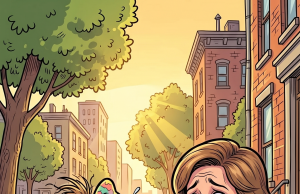
“Get out of here, kid. I told you not to come back—no begging, no flowers. You’re filthy, and you’ll scare off the customers!” the security guard barked at the entrance of one of the city’s most luxurious restaurants, his voice bouncing off the polished marble outside.
The boy was thin, dust clinging to his cheeks, exhaustion stamped into his face. He flinched, but he didn’t run. His eyes stayed locked on the sound drifting through the glass—soft, elegant, impossible to ignore.
A piano.
“I’m not asking anyone for money, sir,” he said, hugging an old sweater like it was the last piece of dignity he owned. “I’ve never begged here. Just… please let me watch the man play.”
The guard sneered. “You think I’m stupid? This isn’t your world. Go back to whatever garbage pile you crawled out of.”
For a moment, the boy’s chin dipped. He came here whenever he could, not for the smell of expensive food, but for the music. Even hungry, even shaking, he’d press close to the glowing windows and watch the pianist’s hands glide over the keys like they were telling a secret story. Some nights, he got lucky. Most nights, he met the guard.
Inside the restaurant, at the VIP table, Augusto Chaves—famous billionaire, respected businessman, a man who could bend meetings and markets with a single call—watched the scene with a growing knot in his chest.
He started to rise, but a hand stopped him.
“What are you doing?” Patricia, his wife, asked quietly, her tone sharp and controlled—like someone who hated attention.
“He can’t talk to a child like that,” Augusto replied, eyes fixed on the door.
Patricia didn’t even bother lowering her voice. “Are you planning to rescue everyone, Augusto? The guard is doing his job. Look at that kid. Dirty, skinny—he’s probably trying to steal.”
Nearby diners glanced over. Augusto stared at Patricia as if he’d never truly seen her until that moment.
“Listen to yourself,” he said, voice tight. “He’s a child. He’s the age our son would be…”
The words hit like a reopened wound. Patricia went stiff. That subject always froze the air between them. She looked away, pretending she hadn’t heard, while Augusto stood and walked straight to the entrance.
“What’s going on here?” he demanded.
The guard instantly straightened when he recognized him. “Nothing, sir. I’m just telling the boy to move along. We can’t have him in front of the restaurant.”
Augusto’s expression darkened. He crouched until he was eye level with the child, his expensive suit brushing the pavement. His voice softened.
“I heard you. You just want to listen to the piano.” He offered a small smile. “I’m Augusto. What’s your name?”
The boy swallowed. “Ellie, sir.”
“You like music, Ellie?”
The boy’s eyes lit up as if hunger and shame disappeared for one heartbeat. “Yes, sir. I love it. Especially the piano.”
Augusto stood and held out his hand. “Then come inside. Listen up close. And you’ll eat, too.”
Ellie stared like the words were too big to trust. “I… I really can?”
The guard stepped forward, uncomfortable. “Sir, we can’t let him in like that—”
Augusto didn’t argue. He simply pulled out his phone, called the owner, and spoke with calm authority. A minute later, the guard’s face changed as he listened to his boss on speaker. When the call ended, the guard swallowed hard and moved aside.
“Of course, sir,” he muttered.
Augusto guided Ellie through the glass doors.
The restaurant turned its head as one.
Some people stared with open disgust. Some whispered. Others looked away, pretending not to see. Ellie’s face burned. He tried to shrink into himself—but Augusto’s steady hand on his shoulder kept him upright.
At the table, Patricia’s smile tightened. “Seriously? You brought him here?” she hissed. “That child is filthy.”
Augusto took a slow breath. “If it bothers you so much, Patricia, you can leave. Go shopping. Do something useful.”
Her jaw clenched. But she stayed—because leaving would mean losing control.
Augusto pulled out a chair. “Sit,” he told Ellie kindly.
Ellie obeyed, stiff and careful, as if the chair might reject him.
He looked around like someone dropped into another universe: chandeliers, gold accents, perfect tablecloths, crystal glasses. But none of it mattered. His gaze kept returning to one thing.
The black piano in the center of the room.
It looked like it belonged in a palace.
“What would you like to eat?” Augusto asked gently.
“I’ll eat whatever you choose, sir,” Ellie murmured, as if he didn’t deserve preferences.
Augusto ordered generously. Then he leaned in, studying the boy’s expression—because something about him felt painfully familiar.
“How long have you loved the piano?”
Ellie’s voice turned soft. “As long as I can remember.”
Patricia laughed under her breath, cruel sweetness in her tone. “And how does a street kid ‘love’ a piano?”
Augusto shot her a look that could cut glass.
Ellie didn’t flinch. “There was one at the orphanage,” he said simply. “An old one. But I used to play it.”
Augusto’s brow furrowed. “You lived in an orphanage… and now you’re on the street?”
Ellie’s gaze dropped. “I ran away. I got adopted, but the man was… bad. He hit me. A lot. I’d rather sleep outside than be trapped again.”
The table went silent for a moment. Even Augusto, a man who’d seen ruthless business and cruel politics, felt something twist inside him.
Then Patricia’s eyes narrowed—an idea forming, sharp and mean.
Since the boy loved the piano so much… why not embarrass him?
She leaned forward with a sugary smile. “If you love it, you should play something for everyone.”
Ellie’s heart jumped. “I… they didn’t even want me inside. I don’t want trouble.”
Augusto placed a reassuring hand on his shoulder. “You’re my guest. And the owner is my friend. If you want to play, you can.”
Ellie’s lips parted, as if he couldn’t believe he was hearing permission. “Thank you, sir,” he whispered. “I thought I’d never touch a piano again.”
Augusto stood and led him to the instrument. The pianist rose immediately when asked. Conversations thinned into quiet. Heads turned. Forks paused mid-air.
The homeless boy in rags sat at a velvet bench that probably cost more than his entire life.
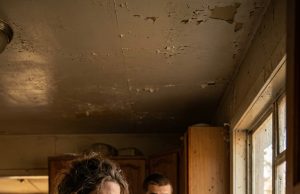
Ellie took a breath, straightened his back, and placed his small hands over the keys.
For one suspended moment, the room waited—expecting chaos, wrong notes, a joke.
Then he played.
And the restaurant forgot how to breathe.
The first notes were gentle, almost shy… and then the melody opened like a confession. Beautiful. Clean. Controlled. Alive. His fingers moved with precision that didn’t match his torn clothes or hungry face. The music wasn’t just skill—it was emotion, like someone pouring years of pain into sound.
People who’d stared in disgust went still. A woman near the window blinked quickly, wiping at her eyes without realizing it. Even the guard—who’d called Ellie garbage—stood frozen, mouth slightly open.
Patricia’s smile died.
Because this wasn’t humiliation.
This was talent. Real, rare talent.
And then—at the VIP table—Augusto’s face changed.
The color drained from him.
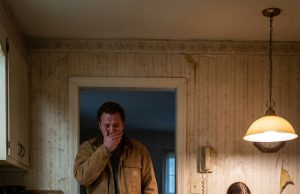
His hand flew to his chest as if the notes had physically struck him. His eyes locked on the boy’s fingers like he was watching a ghost.
“No…” he whispered. “That can’t be…”
His knees buckled.
The millionaire—Augusto Chaves—dropped to the floor.
Patricia shot up, startled. The room murmured in panic. But Augusto wasn’t looking at anyone else.
He was staring at Ellie as if the child had cracked open a sealed grave.
Because the melody Ellie was playing… was not a random piece.
It was his.
A song Augusto had written years ago. A song he had once taught to a small boy sitting beside him on a piano bench, tiny feet dangling, eyes bright with trust.
Augusto’s lips trembled. Tears flooded his eyes.
And that’s when Patricia noticed the detail that made her stomach turn to ice—
A small mark on the boy’s neck.
A mark she had seen before.
A mark that should have been buried.
Her breath caught.
“My God…” she whispered, unable to stop it.
And to understand why the billionaire collapsed… why the wife turned pale… and why that “homeless” child played like someone who had been trained in a mansion—
You have to go back to the day a little boy named Daniel sat at a grand piano… and to the women who decided he was in the way.