The Architecture of Mercy
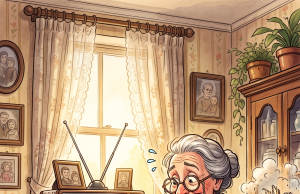
The silence of my house has a specific weight to it, a heavy, atmospheric pressure that settles into the corners of the rooms like dust that no cloth can ever truly reach. It has been three years since I stood at the edge of a rain-slicked cemetery in Portland and watched the finality of a bronze casket being lowered into the Oregon soil, and in that time, I have become a ghost in my own hallways. I am fifty-eight years old, and I occupy a residence designed for a family that no longer exists—a place of echoing hardwood and four bedrooms that serve only to hold the stillness.
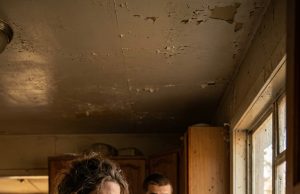
At the rear of my property, nestled behind a row of ancient, weeping willows, sits a small cottage that we used to call the garden suite. It is a charming space, meticulously maintained and fully furnished, yet it has remained a vacuum of human presence for a thousand days. No guests arrive to drape their coats over the chairs; no laughter drifts through the screened door to mingle with the scent of the pine trees. It is a monument to a hospitality that died the same afternoon as my only child.
The end for my daughter had arrived with a terrifying, clinical speed that left no room for the slow processing of grief. I was there for the entire trajectory—the sterile smell of the oncology wards, the desperate, whispered prayers in hospital chapels, and the devastating moment when the lead physician stopped using the language of recovery and started using the language of comfort. I was the one who chose the pale silk dress she wore for her rest; I was the one who brushed her hair until it shone, performing the last maternal duties I would ever be permitted.
An Encounter at the Threshold
People frequently offer the platitude that time is a healer, but I have found that to be a convenient lie told by those who have never looked into the abyss. Time does not heal; it simply transforms the sharp, jagged edges of loss into a dull, permanent ache that you learn to carry with the same begrudging familiarity as an old injury.
A few months ago, I was walking home from a quiet afternoon at a downtown art gallery, hoping the crisp air might settle the restless humming in my nerves. The afternoon sun was casting long, amber shadows across the pavement when I saw her. She was sitting on the concrete outside a twenty-four-hour pharmacy, her back against the brick wall, cradling a bundle wrapped in a faded but remarkably clean blanket.
She looked utterly spent—her face was a map of exhaustion, her skin drawn tight over her cheekbones—but the infant in her arms was immaculate. That was the detail that snagged my heart; despite the obvious precarity of her life, she was pouring every ounce of her dwindling energy into the care of the child. For a jarring, heart-stopping second, my breath hitched in my throat. From a certain angle, under the harsh glare of the streetlights, she possessed the ghost of my daughter’s profile.
I knew, rationally, that it was a trick of the light and a mind desperate for a miracle, yet I found myself rooted to the spot. When she looked up, her eyes were wary but devoid of the practiced aggression one often sees on the street.
“Please, ma’am… I don’t need much, just something to eat,” she said, her voice a fragile thread that barely carried over the sound of the passing traffic.
I opened my handbag, pulled out my wallet, and handed her a hundred-dollar bill without a word. She stared at the currency as if it were a strange, glowing artifact from another planet.
“Ma’am, I can’t… this is too much, I didn’t mean to—”
“You can take it,” I interrupted, my voice sounding more certain than I felt. “Please, ensure the baby has what he needs.”
I turned to walk away, my heart hammering against my ribs, but I had only covered half a block before the heavy silence of my own house seemed to loom up before me. I stopped. I turned back toward the girl who was still staring at the money in her hand.
“Do you have a safe place to sleep tonight?” I asked, walking back toward her.
She simply shook her head, a small, defeated movement that spoke of endless nights spent in transit. The baby shifted in her arms, letting out a soft, rhythmic whimper. I knew what the responsible, detached version of myself should have done—I should have provided the address of the nearest women’s shelter or called a social services hotline. Instead, I heard a voice that didn’t quite sound like mine offer a different path.
“I have a cottage at the back of my house,” I said. “It’s warm. It has a kitchen. You can stay there.”
The Guest in the Willow Shadows
Her name was Clara, and the infant was a three-month-old boy named Julian. I drove them home in the stifling quiet of my SUV, listening to her whispered apologies and her frantic promises to be of use. She told me she could scrub the floors, weed the gardens, or disappear the moment I grew tired of her presence.
“You aren’t here to work, Clara,” I told her as we pulled into the driveway. “You’re just here to be safe for a while.”
When I unlocked the door to the cottage, the air inside was cool and smelled of cedar and time. I watched her as she stood in the center of the small living room, clutching Julian to her chest as if she expected the floor to vanish beneath her feet. It wasn’t a palace, but compared to the concrete outside the pharmacy, it must have felt like a sanctuary.
The suite had been used as a storage area for things I couldn’t bear to look at but couldn’t bring myself to discard. Boxes from my daughter’s old life were stacked in the loft area, sealed with packing tape and layers of emotional resistance. I told Clara I would return shortly with supplies—formula, blankets, and a meal that didn’t come out of a paper bag.
“I’m nursing him,” she admitted, her face flushing with a mix of pride and exhaustion, “but sometimes my body just gives up. I don’t always have enough to give him.”
“I’ll take care of it,” I said, and for the first time in three years, I felt a flicker of the old, maternal competence returning to my limbs.
That night, I sat by my bedroom window and watched the soft glow of the lamp in the garden suite. For the first time in a thousand days, the darkness of my property didn’t feel quite so absolute.
The following morning, I prepared a breakfast tray with the meticulous care of a woman performing a holy rite—fresh eggs, sourdough toast, and a pot of herbal tea. I walked across the lawn, the dew soaking into my slippers, and reached the door of the cottage. Perhaps it was the return of that old familiarity, or perhaps I was simply eager to see the child, but I neglected to knock. I pushed the door open, my voice ready with a morning greeting.
“Clara, I’ve brought some things for—”
The tray tilted in my grip. A ceramic plate shattered against the hardwood, and the tea spilled in a steaming amber pool, but I didn’t notice the mess. My eyes were fixed on the scene in the center of the room.
The Porcelain Mirror
Clara was sitting on the edge of the sofa, her face drained of color as she looked up at me. She wasn’t holding Julian. Instead, wrapped in a soft blue receiving blanket, she was cradling a porcelain doll.
It was my daughter’s favorite—the one with the hand-painted eyelashes and the tiny, nearly invisible crack on the left thumb. I had tied that yellow silk ribbon around its neck twenty years ago. I had packed it into a box marked KEEP and hidden it in the loft because the sight of its glass eyes felt like an accusation of my failure to keep my own child alive.
The boxes in the loft were open. Photo albums were splayed across the coffee table, and the floor was littered with the remnants of a life I had tried to entomb.
“Where is the baby?” I demanded, my voice sounding like it was coming from the bottom of a well.
She pointed toward the bedroom, her hand trembling. “He’s in the dresser… I pulled the bottom drawer out and made him a bed with the towels. I was so afraid I would roll over on him in the big bed if I fell asleep too hard. I’ve seen people do it… I just wanted him to be in a place where he couldn’t fall.”
I walked to the bedroom and saw Julian, fast asleep in the improvised cradle of a mahogany drawer, looking peaceful and profoundly safe. I turned back to Clara, my anger struggling to find purchase against the sight of her holding that doll.
“Why are my things open, Clara?”
She began to weep then—not the loud, performative crying of the desperate, but the quiet, rhythmic sobbing of a person who has finally been caught in a moment of profound loneliness. “It was so cold in the middle of the night,” she whispered. “The heater made a noise and I got scared, and I went up to the loft to find another blanket for Julian. The tape on one of the boxes was old… it just gave way. And then I saw her face in the pictures. I knew I should have stopped, but she looked so much like she was loved. I just wanted to look at her for a minute.”
The Architecture of Loneliness
I sank into the armchair opposite her, the strength leaving my legs. “You went through her life,” I said, though it wasn’t a question.
“I saw the way you kept it all,” Clara said, her eyes fixed on the doll in her lap. “I’ve never had anyone keep so much as a drawing I made. I’ve been in foster homes since I was five. I’ve lived in cars and shelters and under awnings. I saw those albums and I realized that someone in this world was cherished like a treasure. I just wanted to know what that felt like… even if it was just by holding her doll.”
The silence that followed was different from the silence in my main house. This wasn’t the silence of absence; it was the silence of a shared, jagged recognition. I looked at Clara—this girl who bore a superficial resemblance to my lost child—and I realized that the physical likeness wasn’t why I had brought her home.
I had brought her home because she was a mirror of my own internal landscape. We were both survivors of a world that had stripped us of our anchors. She was starving for a history, and I was drowning in one.
“She was impossible,” I said softly, looking at an open photo of my daughter at age seven, her face smudged with chocolate and her eyes bright with defiance. “She believed the entire world was a stage built specifically for her amusement. She would have hated those boxes. She would have wanted the doll to be held.”
Clara looked at the porcelain face in her hands, her fingers tracing the yellow ribbon. “I can leave,” she said, though the words seemed to cost her everything. “I’ll pack it all back exactly the way it was. I’ll make it like I was never here.”
I looked around the room—at the shattered porcelain on the floor, the spilled tea, and the dresser drawer holding a sleeping infant. I thought about my house, the way it had been for three years—a place where everything was “exactly as it was,” and yet nothing was right.
“Exactly as it was hasn’t done me any favors, Clara,” I said, standing up and walking over to the dresser. I lifted the sleeping Julian into my arms, feeling the incredible, fragile weight of him. “Next time you want to look through the boxes, you should ask me first.”
She wiped her eyes, her breath catching in a shaky laugh. “I will. I’m so sorry.”
“And next time,” I added, looking at the albums, “we’ll look through them together. I’ll tell you the stories that go with the pictures. They shouldn’t be kept in the dark anymore.”
The First Mercy
That was the beginning of a different kind of life. It wasn’t the sudden, miraculous healing that one reads about in novels; grief is a slow-moving creature that doesn’t vacate the premises easily. But the house stopped being a tomb.
Clara and Julian stayed. Not for a few nights, but for the season, and then for the year. We cleared the boxes out of the loft and moved them into the main house, where we slowly began to integrate the past into the present. Judith wasn’t a replacement for my daughter, and Julian wasn’t a ghost, but their presence forced the air to circulate in rooms that had been stagnant for far too long.
We sat on the floor of the cottage that afternoon, the broken tea set cleared away, and I told her about the girl in the yellow ribbon. I told her about the tantrums and the triumphs, the way she loved the rain and the way she hated the quiet.
I realized then that for three years, my grief had been my only companion. It had been a jealous, demanding presence that crowded out everything else. But as I watched Clara listen to my stories with the hunger of a girl who had never known a home, I realized that my sorrow finally had company.
It isn’t peace, and it isn’t the absence of pain. It is simply the recognition that we are not meant to carry our shadows in the dark. Sometimes, the most profound mercy we can be offered isn’t the ending of our grief, but the arrival of someone who is willing to sit with us in the ruins and help us sort through the boxes.
Julian is walking now, his small feet thumping rhythmically against the hardwood floors that used to be so silent. The house is still too big, perhaps, but it no longer feels empty. And every now and then, when the light hits the willows just right, I look at the cottage and I realize that the door is finally open.
Sometimes, the things we pack away are just waiting for the right person to find them.